Leather and suede boat shoes
Boat shoes all look alike until you put them on. The difference is not the shape: it is the material they are cut from and the hands that stitch them. We work with full-grain leather and natural suede in our Alicante atelier, and this is what changes against a synthetic boat shoe.
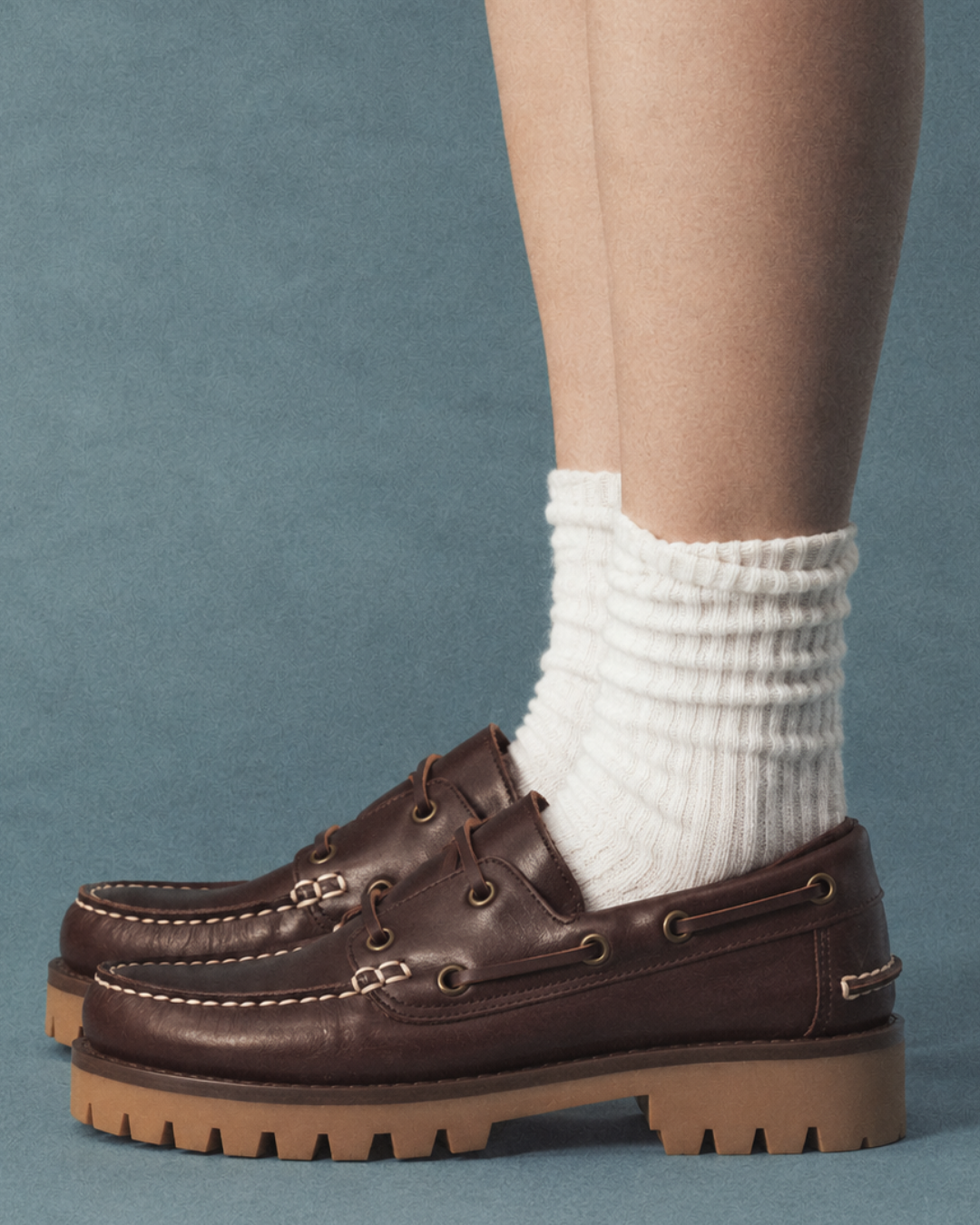
Leather and suede versus synthetic materials
They can look similar in a photo. Two weeks of wear tells them apart.
Breathability
Natural leather and suede
Natural fibre lets moisture out: the foot stays dry and at a steady temperature all day.
Synthetic and faux leather
The plastic layer seals the foot. Sweat stays inside, bringing heat, damp and odour.
Fit
Natural leather and suede
Leather gives at pressure points and takes the shape of your foot within a few wears.
Synthetic and faux leather
The material never gives. Wherever it rubs on day one, it still rubs a year later.
Durability
Natural leather and suede
It can be cleaned, nourished and brought back. With basic care it lasts season after season.
Synthetic and faux leather
Flex creases crack and the surface layer peels. There is no repair.
Ageing
Natural leather and suede
It gains tone and character with wear. The patina is part of the shoe, not a flaw.
Synthetic and faux leather
It dulls and discolours unevenly. It ages badly from the first month.
Hand
Natural leather and suede
Suede has a short matte nap, warm to the touch; full-grain leather is firm and supple at once.
Synthetic and faux leather
Uniform, cold, with no real grain. Fold it and you feel the film.
Anatomy of an atelier boat shoe
Hand-stitched vamp
Stitch by stitch, so the upper wraps the foot instead of staying rigid like a glued piece.
360º lacing
The leather lace around the collar is not decoration: it sets the real fit of the shoe on each foot.
Rubber sole
Light, flexible, with a grip pattern. Built for city walking, not only for a deck.
Lining and insole
Leather inside so the foot breathes where a synthetic lining shows its worst.
Boat shoes in autumn and winter
The boat shoe stopped being a summer-only shoe long ago. In suede and closed leather it works from September through April.
- —With straight denim and a chunky knit for the weekend.
- —With pleated chinos and a shirt, as a comfortable alternative to a dress shoe.
- —With a fine wool or cotton sock: warmth without breaking the line of the foot.
- —Earth-tone suede for grey days; smooth leather when the occasion asks for more.
Frequently asked questions
How long does a leather boat shoe take to mould?
Two to four wears. The leather gives at pressure points and keeps that shape, which is why we do not recommend sizing up.
How do you clean suede?
Dry, with a soft brush, always in the same direction to lift the nap and remove dust. For marks, a dedicated suede eraser. Never running water or soap.
Do they handle rain?
They cope well with light damp. If they get wet, let them dry at room temperature away from radiators, with paper inside to hold the shape.
Which size if I am between two?
Take your usual size. If you are between numbers or have a wide foot, message us on WhatsApp and we will advise on the specific model.
Where are they made?
In our atelier in Crevillent, Alicante, within the shoemaking tradition of Elche. Short runs, checked by hand piece by piece.
Choose yours
Leather or suede, same handmade construction. If you hesitate between models, we are here.